
Dennis Scholl likes to joke that he is the oldest “emerging artist” around. In Miami, where he has spent nearly five decades as a collector, philanthropist, filmmaker, and institutional force, the line lands somewhere between provocation and self-diagnosis. When we sat down for this conversation, he had recently “come out” as an artist with a body of work built from the kinds of objects he has spent a lifetime preserving, studying, and patronizing: baseball cards, law books, first editions, NASA photographs, CIA reports. The materials are resolutely analog, stubbornly pre-digital. The question is what it means to activate them now.
Scholl’s biography is not incidental to the work. For years he was known for “finding opportunities early” and building ambitious collections, as well as for his role at the Knight Foundation, where he helped reshape Miami’s cultural landscape from the philanthropic side. That history makes his late-life pivot to studio practice both structurally privileged and genuinely risky. No one particularly wants a collector-philanthropist to cross the line into authorship. Yet it is precisely from this uneasy threshold—between patron and producer, archive and artwork—that his practice derives its charge.
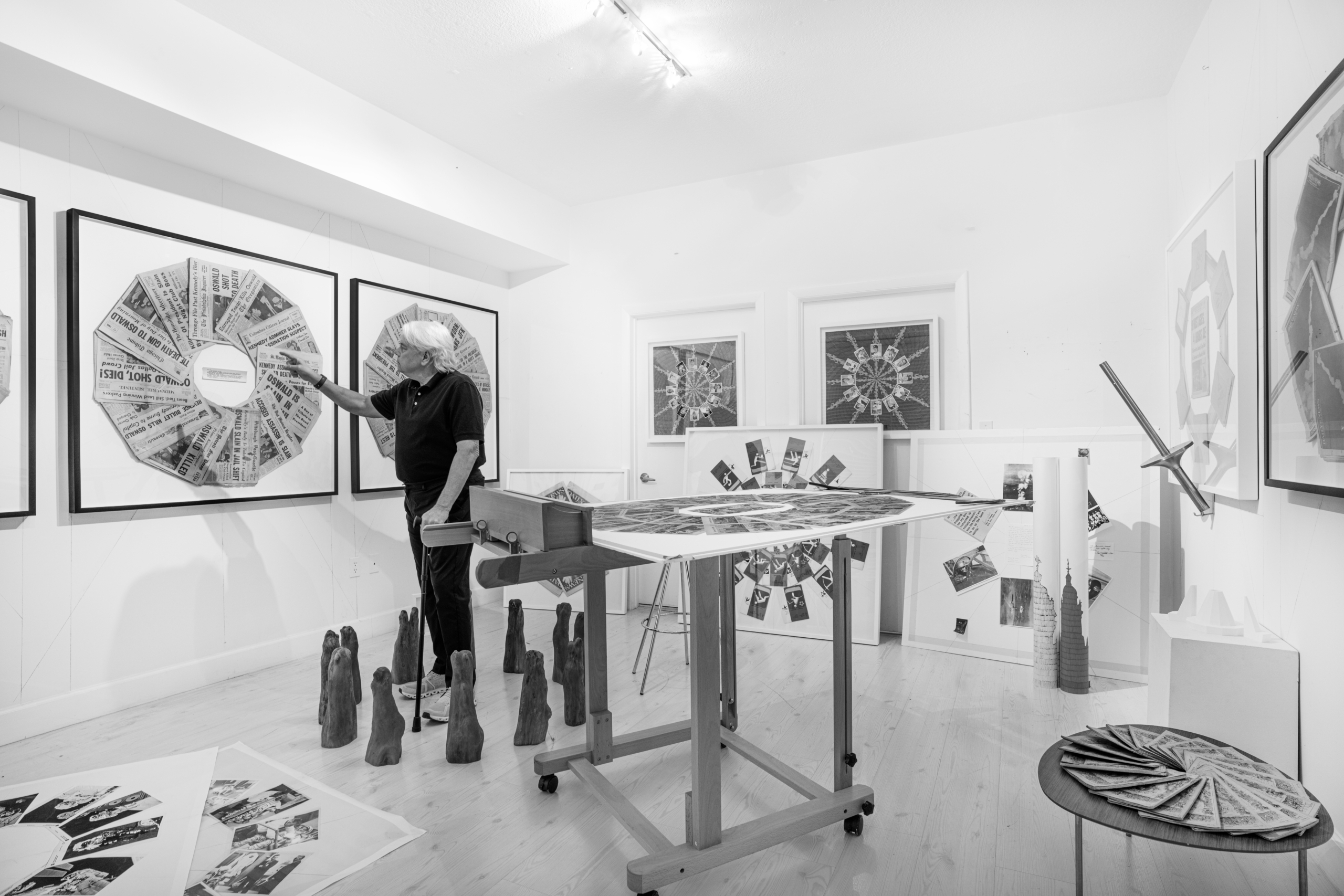
Dennis Scholl in his studio. Photo by Pedro Wazzan.
—
Scholl is drawn to objects that carry the texture of lived history: the broadcast monoculture of his childhood, the tactile economy of collecting, the obsessive rituals of drawing, the unresolved political memory of Miami, the heroic and melancholic mythology of the space program. His assemblages do not so much transform these materials as frame them, making them available as portals into historical and personal time. They ask what remains legible when memory is mediated by objects rather than screens.
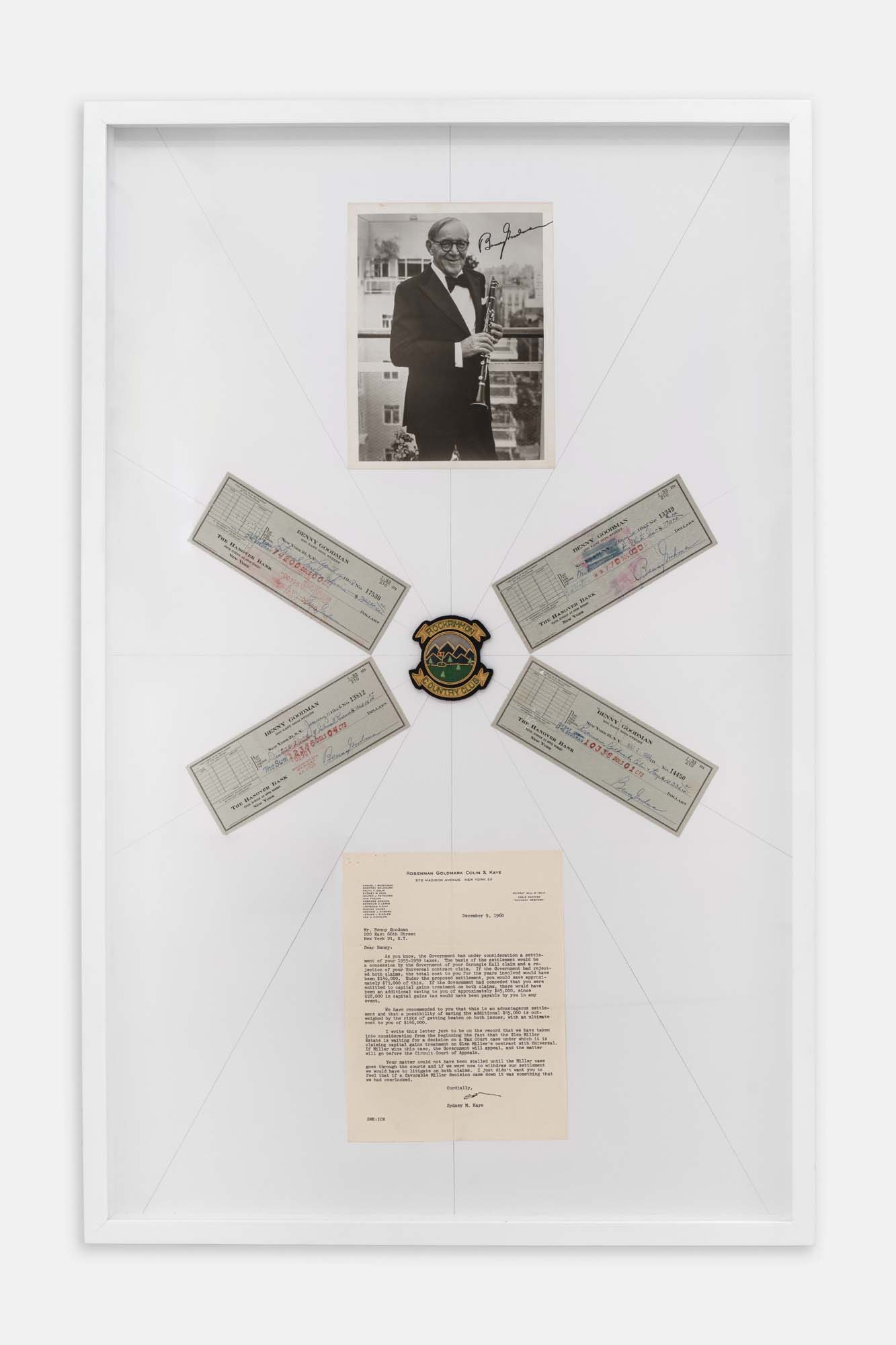
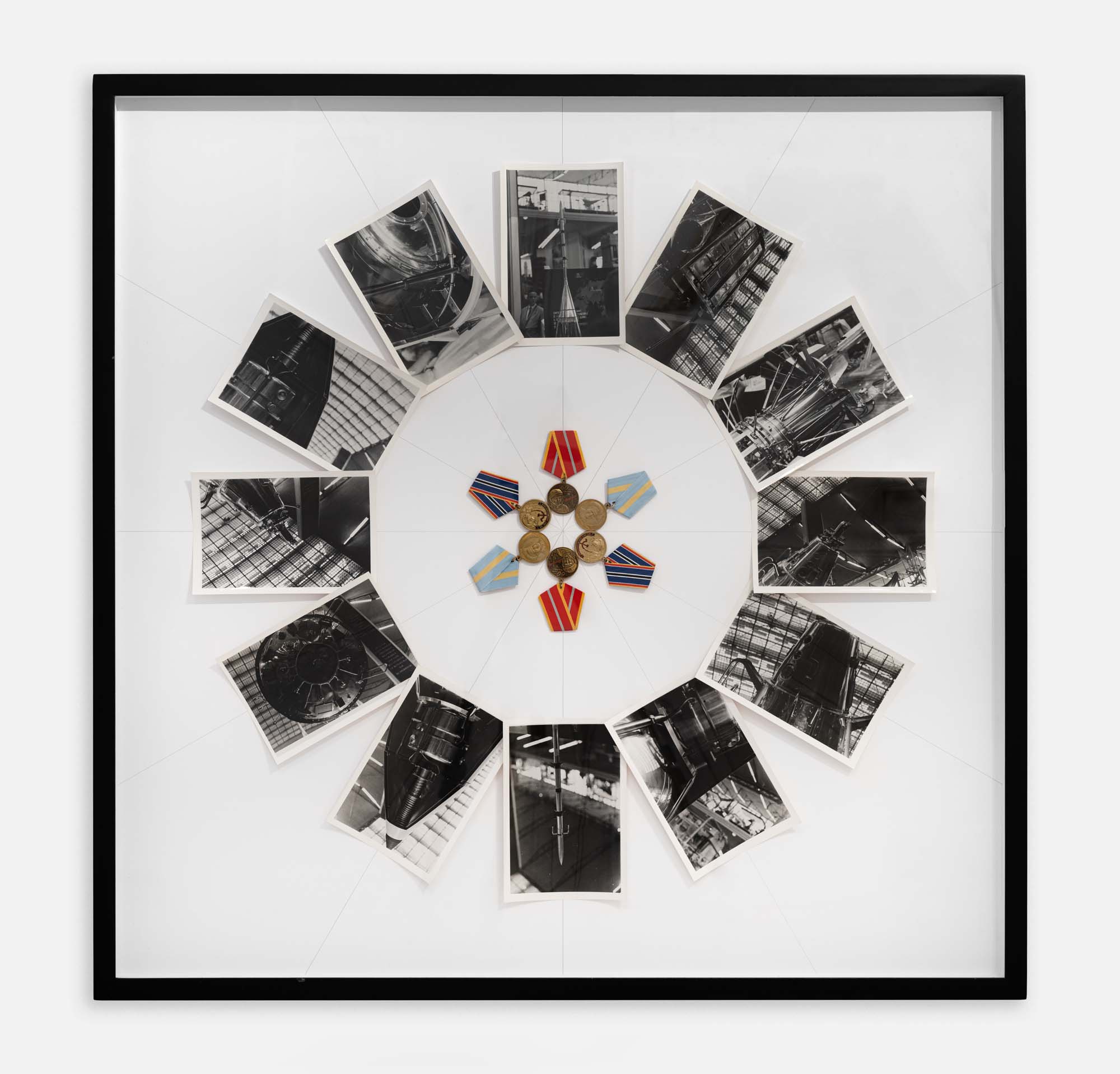
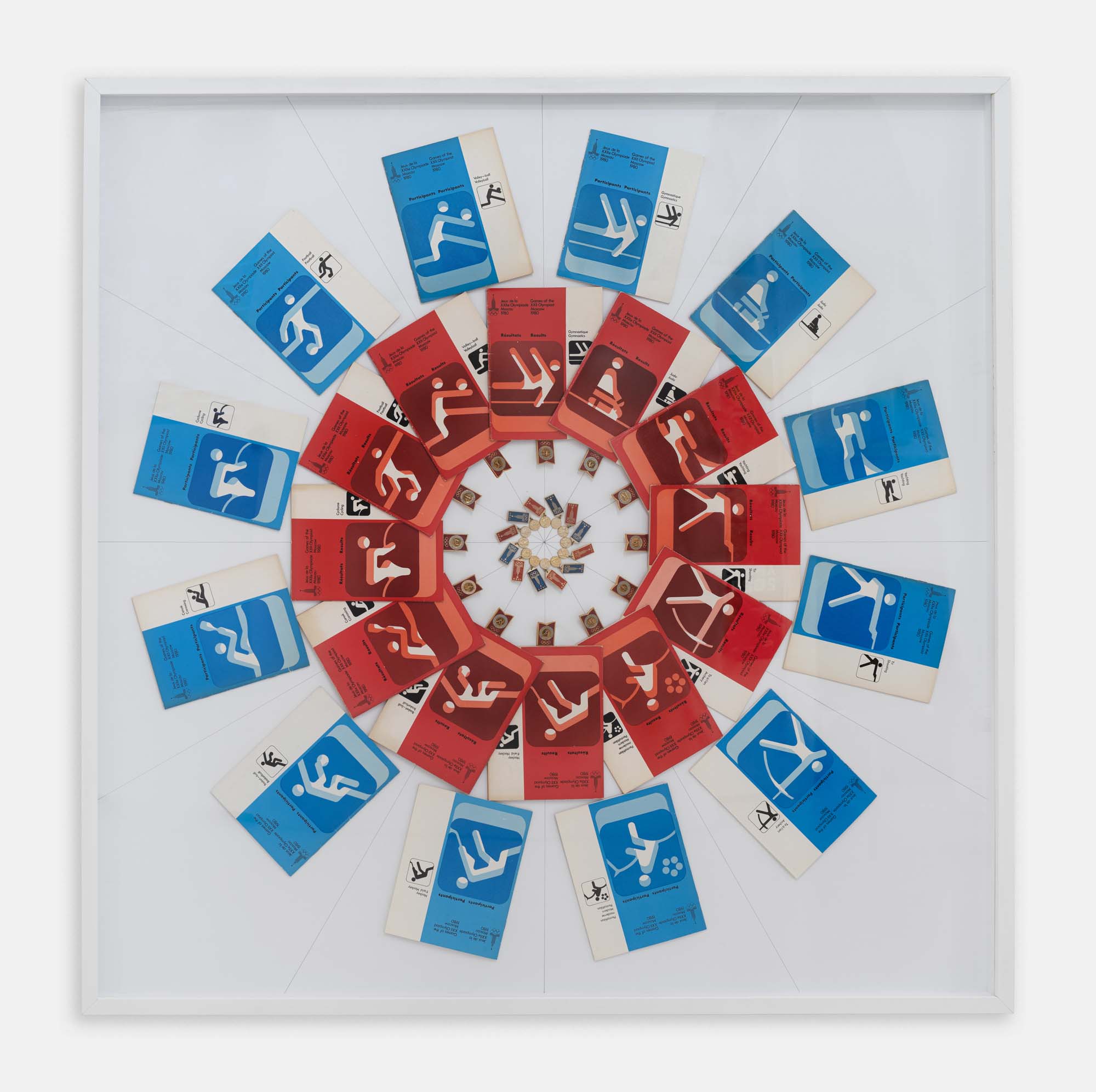
Over the course of this interview, we move from Scholl’s early drawings as a young lawyer trying to learn how to listen, to the influence of Aboriginal painting communities in Australia, to his current assemblages and upcoming bodies of work. We speak about the so-called digital divide, the lost monoculture of broadcast television, John Glenn’s orbit around the Earth, the Bay of Pigs, and the problem of making autobiographical work. Although Scholl’s works are built from collectible archival objects, my interest lies in how those objects bear the sediment of social history. His strongest works do not transform the archival object so much as choreograph its return. From a distance, they appear as harmonious abstractions keyed to repetition and symmetry; up close, they become dense historical surfaces that solicit memory, projection, and free association. The radial structures and shallow vitrines prevent the materials from becoming mere memorabilia: their form is not expressive transformation but disciplined presentation. What emerges is a mediated encounter with history through the material residue of print culture—portals through which we reflect on our own relation to the histories they contain.
We also talk bluntly about Miami: its missing MFA, its fragile critical infrastructure, and the artist-run spaces, like Dimensions Variable, trying to hold a scene together while real estate, philanthropy, and cultural policy shift beneath them.
What follows is an edited conversation about practice, memory, and the conditions under which art and criticism are still possible in Miami.
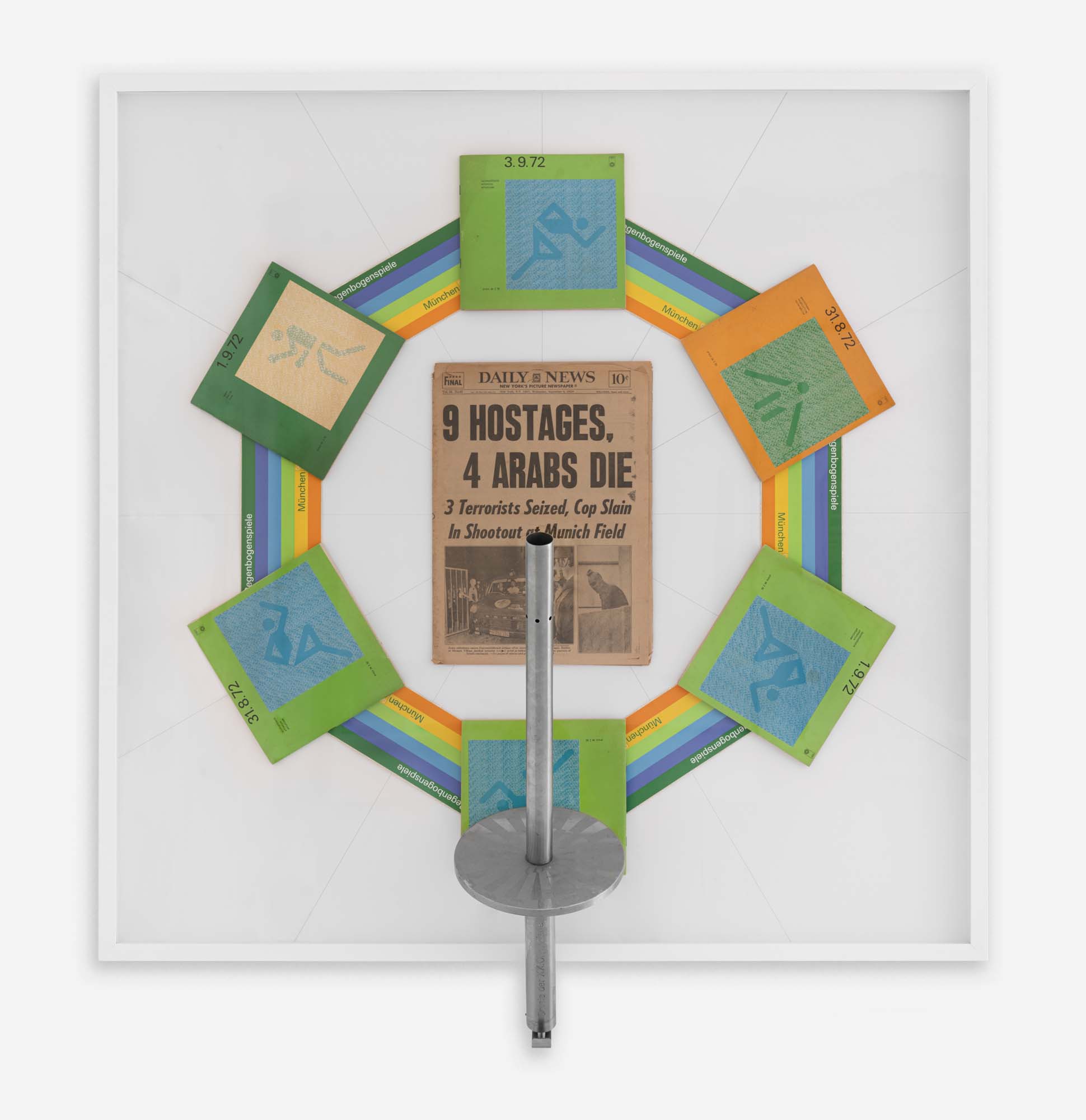
Installation view of Dennis Scholl’s The Melody Haunts My Reverie. Photo by Michael R. Lopez.
Courtesy of the artist and Piero Atchugarry gallery
—
Origin Story: From Collector and Philanthropist to Artist
Laurie Rojas: I think the big arc of the conversation is your transition from collector and philanthropist into artist. You joke about being an “emerging artist,” and I like that term for you because you still have very real emerging-artist questions around the work. But in your case they are complicated by how much you already know: your trained eye, your reputation for connoisseurship, your exposure to the art world, and all the ambivalence that comes with that.
Dennis Scholl: I’ll start with the origin story, because I think it’s not as linear as it seems. You know that I’ve been collecting for 47 years, and I always wanted to have a creative practice. Up until recently, I don’t think I had the courage to do it.
I felt it would be particularly difficult for me because I had spent a lot of time in the art world. I had developed a reputation, I guess, for connoisseurship—for picking artists early, for picking art well. Debra and I built a series of five different art collections with a lot of effort and looking.
I always thought making art was hard. I respect artists greatly. I never thought it was anything but hard. But as I got older, I guess when I turned 50, I said, “Well, you still want a creative practice.”
Laurie Rojas: And I fundamentally believe everybody has the right to do that.
Dennis Scholl: I don’t disagree. But my life is about aspiring to excellence, trying to do things well. Sure, I could sit in my room and draw pictures of sailboats and sunsets, but they wouldn’t be very good, and it wouldn’t make me happy. I understand how the art world works, and if I was going to make art, I would want to try to be part of the art world that I know.
When I turned 50, and maybe became a little braver. I was watching the first Obama inauguration, and Aretha Franklin stood up with one of these crazy hats on. It blew my mind. It was an incredible hat, and I thought, I have to do something about that.
Then a month later, while I was working at Knight Foundation. We had created a program because we had a hard time getting the Black community to come to the Knight Concert Hall. It was called Free Gospel Sunday. We brought the best gospel singers in the world to Miami and invited the churches to come. We brought buses to the churches, with box lunches on the buses, and everybody came out of church and came to Free Gospel Sunday. It was one of those great moments in Miami where everybody was there. And as the ladies got off the bus, they had those amazing hats on again. I said, “Now that’s kismet. Now I’m really going to do something about it.”
I had been doing on-camera work (which I didn’t enjoy that much) for a resort television network. But I met Marlon Johnson there. I said, “I want to make this film. Will you make it with me?” He said, “Oh my God, I grew up in those churches.” So we made this five-minute film called Sunday’s Best, and it played everywhere. It had a very successful festival run, played on public television, and won a regional Emmy—my first regional Emmy. I have 24 now. And I got bit by the creative bug. I loved the making process. I loved telling the story.
So I started making films like crazy. I made a story about soul music in Miami in the 1960s. I made a Clyfford Still film. Kareem Tabsch and I made The Last Resort, which played on Netflix. But there was a problem: I like to obsess. When you make a film, it takes maybe 15 people to make a five-minute film. One person is good at graphics, another at sound, another at editing, another at shooting. I still had a day job, but I found myself with a lot of time in between, and I wanted to be creative all the time.
Maybe ten or eleven years ago, I said, “I think I want to make things in an art studio, because I think I can do that obsessively.” That’s how my practice started. Film, even when it is about art and artists, is only art-world adjacent.
Laurie Rojas: It’s not the art world at all. If you show at a film festival, it’s a different industry and a different audience.
Dennis Scholl: Right. But I don’t think I ever would have made art if I hadn’t had such a positive response to the films. It let me know I could have a creative practice. It seemed like I could tell a story, and it seemed like I could marshal the resources—people, in particular—to do what I wanted to do.
Then I went into the studio and started making things. They weren’t very good. For about five years I fumbled through, and during that time I didn’t tell a soul. Nobody. I wouldn’t even let Debra see the work. At the end of five years, I said, “No. I know what it’s like to be in the art world. I know when I see something that is decent enough to show people, and none of this meets that standard. Throw it away.” And I discarded everything I had made up to that point.
Then, six years ago, I started on the track I’m on now. I felt I was making something I wasn’t seeing elsewhere, which is very important in the art world. It also felt authentic to me because I had collected many, many objects—2,000 works of art—and I understood that world. It was very important that whatever I did would be authentic.
I basically converted my collecting practice to an artmaking practice and I began making art from collectible objects.
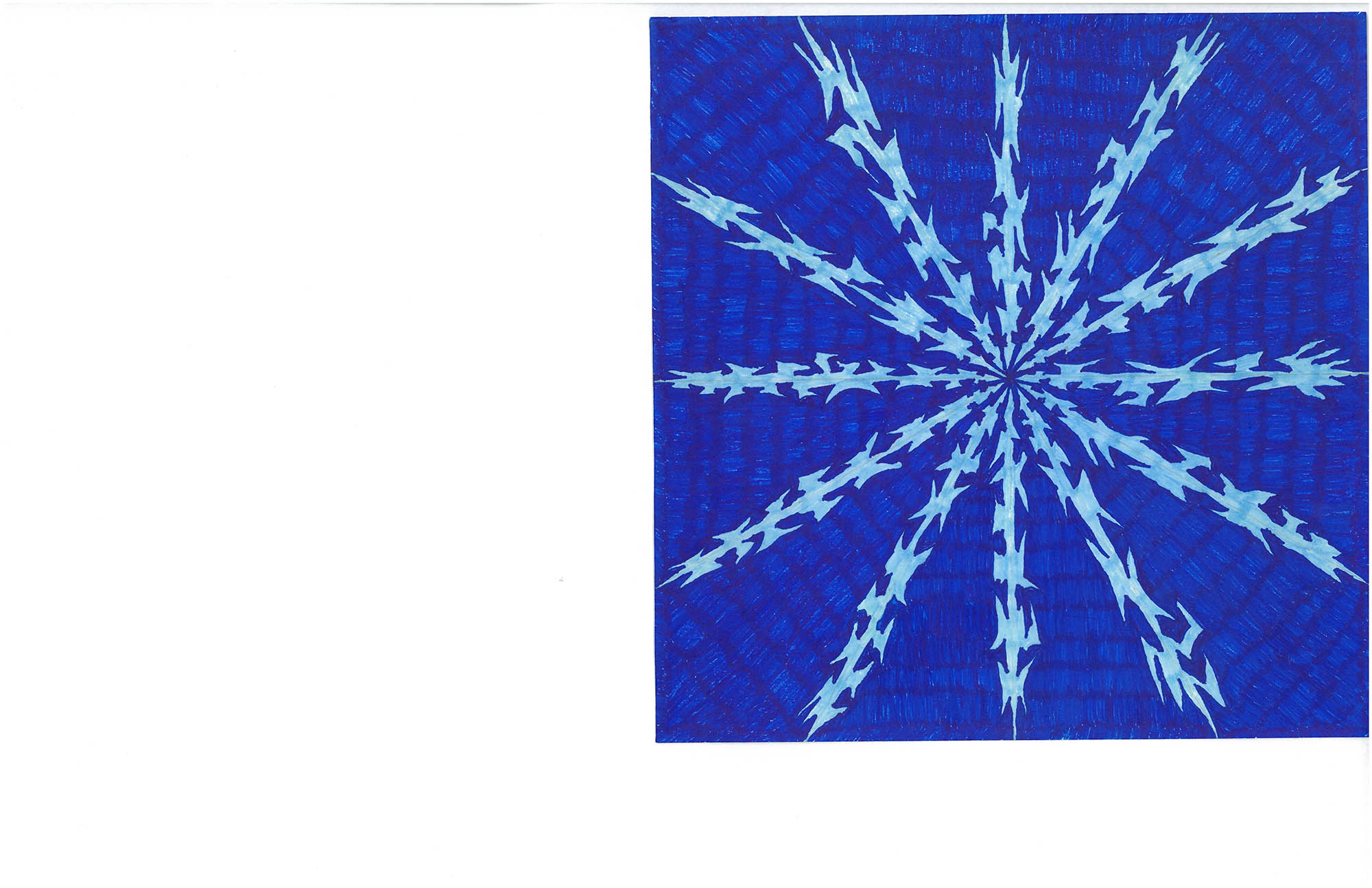
Untitled (Dodecagon Drawing Series), 2024.
—
Drawing, Ephemera, and Ritual
Laurie Rojas: I wanted to ask about the drawings. So far, in the shows we have very little of that. It’s there in subtle lines in the back, but I wondered why there wasn’t more, because somewhere in my brain I am seeing you do more with drawing.
Dennis Scholl: I have used the drawings very sparingly. That is all about to change, as I am finishing up 125 drawings for a commissioned show at Mount Sinai Medical Center. They will be exhibited on the 193-foot-long Braman Wall—which opens in the fall. So the drawings are about to have their coming-out party. I have been making the works for the show for over three years. I think they add another texture for people, another bit of understanding.
Laurie Rojas: And the baseball cards?
Dennis Scholl: Those are very early pieces. Those are baseball cards I collected when I was ten years old—1965 baseball cards. I had 3,000 of them. After bottle caps, stamps, and coins, baseball cards were the next thing I collected.
Debra is a purger; she throws everything away. I am not. Somehow, after 47 years together, these cards survived. When I started thinking about the work after the first five years of making and not figuring it out, I knew I wanted to use the baseball cards. I went through a bunch of iterations. I blew them up, but I wasn’t onto the idea yet. Eventually I figured out that everything in the work had to be original.
Laurie Rojas: The drawings bring back a comic-book quality, a mid-1960s context, which then gets reproduced in the objects.
Dennis Scholl: I don’t know if you know where the drawings come from. When I was a young lawyer, I talked too much in meetings. I was a corporate lawyer, and I wasn’t a good listener yet. I was self-aware enough to know that if I didn’t figure that out, I was going to have a problem.
In meetings, when people would go on and on, I wanted to say, “Look, it’s over there. That’s where we’re going. Why don’t we just go there now?” Instead, I had to let people get their thoughts out. So, in order to keep myself from interrupting, I began to draw this kind of hyper-realized ray, and I drew it over and over. At the end of meetings, people would say, “Can I have that?” There are probably a hundred of them out there.
For me, the drawings were not really meant to be seen. It is a meditative process. It lets me think about everything else. I try to do it in the afternoons, when I’m winding down from the day. It’s a ritual. It brings me joy—not because of the result, but because of the process. I love sitting and meditatively drawing while listening to jazz. There is always jazz on in the studio.
I draw this singular mark, and I’ve never left it. That was 38 years ago. I draw it when I’m traveling. On the plane is great for me, either writing or drawing. I love to write on the plane.
Aboriginal Painting and the Joy of Repetition
Laurie Rojas: You’ve connected the drawing, too, to your experience with Aboriginal work in Australia.
Dennis Scholl: Yes. One of the reasons I’m drawing as part of my practice is because of the Aboriginal work. I was going down to Australia and met with Rachel Kent, who is one of the best curators there for contemporary art. I was always asking what to see. The non-Aboriginal Australian art had some good artists, but not that many. She said, “You’ve got to go see the Aboriginal.” I had seen some, but it wasn’t that interesting to me. She said, “You’re looking at the wrong stuff.” That, to me, was catnip.
She sent me to see the right stuff. I came home and said to Debra, “You’re not going to believe what we’re going to do next.” She said, “What do you mean?” I said, “We’re stopping this contemporary art-world stuff for a while. We’re doing this.” It was a moment when the world had moved away from Aboriginal contemporary art, but I moved in and acquired hundreds of works. It was scary, because for five years we made the market. I had never done that before.
I would sit with the artists, the ladies in particular, in the art communities—in the studios, out on the patio in the sun. They love the sun. They sit on little pieces of foam, with their paintings in front of them, on the ground. The dogs yapping all around, running across the wet canvases. They have sticks to keep the wild dogs away. I sat there day after day in different communities, and you just get into that rhythm. You just sit there and watch their repetitive mark making.
When I came back and started drawing, that’s what I was thinking about: how much joy they got out of it. I took that back with me. Meditative is the word.
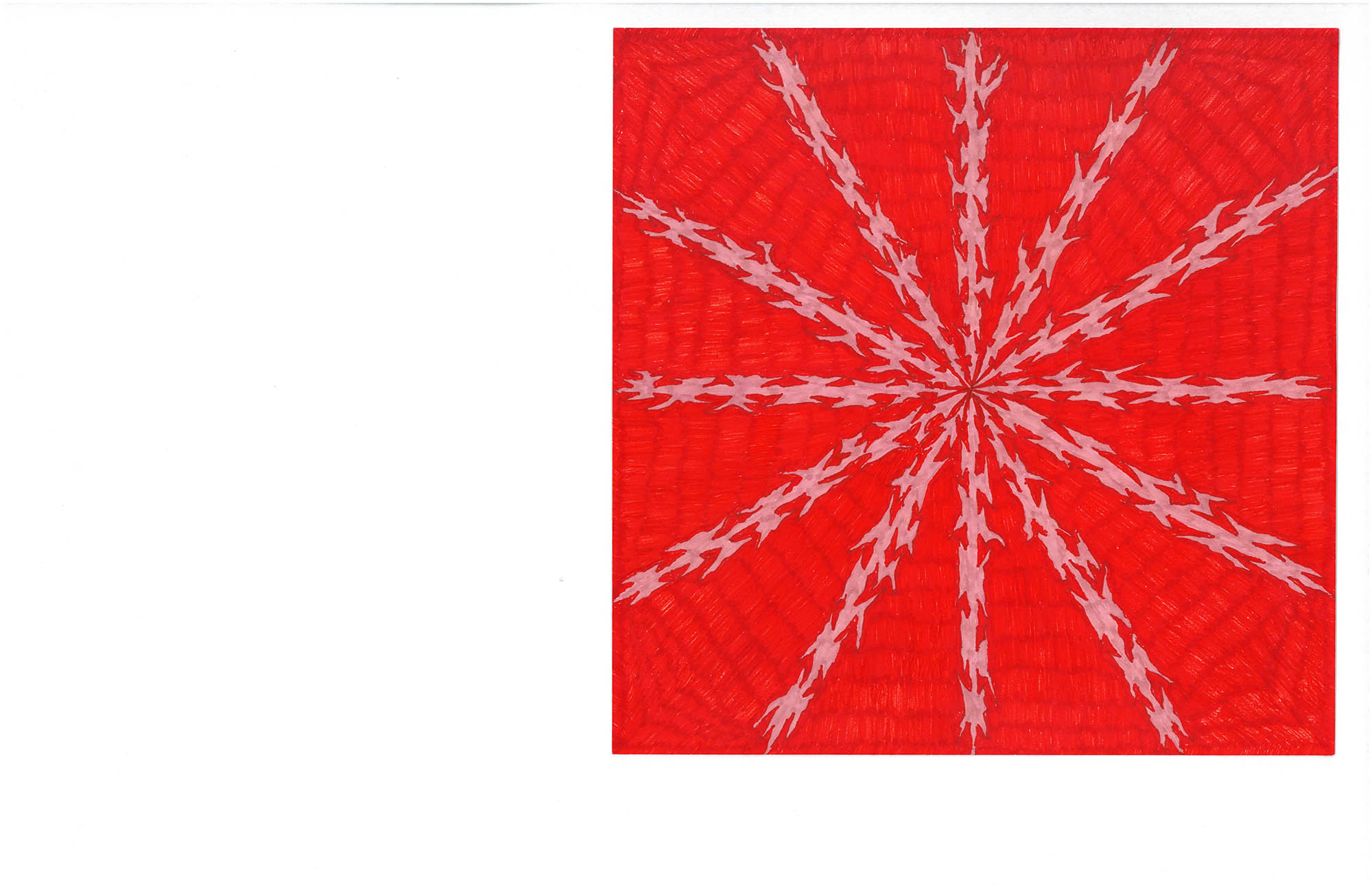
Untitled (Dodecagon Drawing Series), 2025.
—
Portals, Memory, and the Digital Divide
Laurie Rojas: When I walked out of your first gallery show at Piero Atchugarry after talking with you, I kept thinking about the autobiographical element. We talked about family-adjacent material, and you opened up in vulnerable ways. But I also wondered about nostalgia—the pull of youth, memory, and those objects.
Dennis Scholl: I hardly ever use the word nostalgia. In fact, I don’t use it, because I don’t think what I’m doing is nostalgia. The subjects of the works (like assassination) are not nostalgic. I think my work is a response to being on the wrong side of the digital divide. The world has changed dramatically in my lifetime. If you asked my grandparents, they might have said television or air travel changed everything. But for me, it is the digital divide.
I grew up in a monoculture. We had one newspaper and three TV stations. This is one of those areas where being older contributes directly to the practice. It matters because of lived experience. These things are not better or worse, or nostalgic. They are simply different.
Laurie Rojas: For me, the work is pleasurable because it gives me the chance to contemplate original documents and source materials—to enter a historical moment through objects. My first instinct, which I told you, was that you weren’t transforming the objects enough. You were creating ornamental shapes with them, and not really giving them a new form. But you pushed back.
And with more time in the space, I recognized that they are obviously precious to you, and I can’t ask you to ruin them in order to transform them. Your step as an artist was to give them a presentation I could enter subjectively, almost as a way of traveling through time. They become portals through time: no-time-machine objects.
Dennis Scholl: I love your idea of the artworks both looking like and acting as portals, because that is the idea—to bring you to a place. The experience you had in the show completes it for me. That’s all I want from the viewer. I want the viewer to find a piece and excitedly say, “Let me tell you where I was. Let me tell you what I was doing.”
I can’t get you to look at a Clyfford Still or a Joan Mitchell painting and have the emotion I have when I look at it. But I can get you to be emotionally engaged by bringing you to a place you’ve been before and don’t think about very much. That is the sum total of what I’m trying to do.
Laurie Rojas: That’s very generous.
Untitled (Benny Goodman), 2024
Courtesy of the artist and Piero Atchugarry gallery
—
Space, the Bay of Pigs, and Historical Memory
Laurie Rojas: You also have a major body of work in progress about the history of space exploration. Tell me about that.
Dennis Scholl: The exhibition is called The Day of Four Sunsets. It has three sections: lift-off and ascent, orbit and observation, and re-entry and reflection—it is comprised of the detritus of space exploration.
The title comes from John Glenn’s experience of witnessing four sunsets as he orbited Earth in 1962. Glenn’s joyful experience contrasts with Antoine de Saint-Exupéry’s The Little Prince, where “one loves the sunset when one is so sad.” I’ve been collecting tons and tons of NASA material. Most of what you see are NASA photographs, including photos of John Glenn getting ready to take off. There is also a letter he signed and a Sputnik object, because space exploration was the race against the Soviets.
Laurie Rojas: That seems connected to the same question of historical objects becoming prismatic.
Dennis Scholl: Exactly. I’m also working on a piece about the Bay of Pigs. I acquired all five of the CIA reports that had been held confidentially until 2014. It’s going to be a sculpture made out of the documents themselves.
Laurie Rojas: My grandmother’s brother participated on the American side. My family left Cuba in 1962 under duress. My grandmother was an accountant for the National Bank; my grandfather was a pharmacist who refused to turn over his pharmacy during the nationalizations. They basically had a 24-hour warning, and they left under tremendous pressure. That first generation thought they were going back in a year or two.
Dennis Scholl: All my friends when I moved down to Miami in 1964 were boys who had just come over. Some were Pedro Pan; some had families who left with empty pockets. So I have a particular affinity with that moment, because those were my boys. Those were people I hung out with as a young teen.
I think about that moment a lot. It was a very tense moment in world history, not just for Miami. It has a Kennedy link. It has the world poised precariously once again. It is, as you note, a very prismatic subject.
Laurie Rojas: With all of this, it’s true that the works are prismatic.
Dennis Scholl: That’s the idea—that the works function like prisms, or portals. They bring you into these historical moments, but through your own memories and associations.
Untitled (Stolen Sputnik), 2025
Courtesy of the artist and Piero Atchugarry gallery
—
Miami, Criticism, and Infrastructure
Laurie Rojas: We were talking about Miami’s limitations. Miami has grown insanely, as we both know, in terms of patronage and institutions. But there are important critical gaps in the city. Leyden Rodriguez-Casanova recently asked me why the ecosystem around Art Basel Miami Beach feels flat. Why is it hard to have more writers here? We know magazines went through their reckoning—print, the internet, advertising. The single-artwork review died decades ago. Art criticism had its own 20th-century crisis that has nothing to do with economics. So sitting where you are now, no longer at Knight, how do you see what’s missing?
Dennis Scholl: The city has just gone through a cultural upheaval. Michael Spring, who led what I believe was the gold standard for local government and culture’s relationship—both economically and aesthetically—has retired. Alberto Ibargüen has left Knight. The entire cultural sector is waiting to see if our community will remain committed to the arts.
That is an upheaval for artists just when they understood where things were available, what was available, and how to go get it. The rules are changing right before our eyes. It’s frustrating. It is also frustrating in business when you have a banking relationship and your banker leaves. So it is not unique to art. But it is a moment when they have flipped the carpet and everybody has gone flying into the air. You look down, and there are all new players.
I think the city is missing two things right now for individual artists. It is missing a great MFA program. It’s not that you can’t get an MFA here. It’s that we are not getting the kind of critical discourse artists need in order to go do something grand in the art world.
The second thing is the lack of critical discourse in writing. We had the Miami Rail for a while, but it isn’t published anymore. There’s no clear, sustained platform. But I still believe that great writing is imperative. That’s the old saying: in the land of the blind, the one-eyed man is king. Everybody is writing now, but good writing always elevates. It elevated the artwork and the discourse.
Laurie Rojas: I wrote my master’s thesis on this—on why art criticism collapsed, and why conceptual art and postmodernism gave a false resolution to the problem of critique. The incomplete project of modernity remains. But then we are in Miami, with this very specific ecology.
Dennis Scholl: I sat at Knight for seven years in executive committee meetings where we didn’t just talk about art; we talked about journalism. Nobody has a solution. Everybody has an opinion, but nobody has a solution.
Laurie Rojas: Which is why I now find myself teaching artists how to write grants and working with Dimensions Variable, trying to build some kind of critical and pedagogical infrastructure from below.
Dennis Scholl: There is a huge need down here for that. I think spaces like Dimensions Variable and Locust Projects have evolved into that role. They do a great job of looking and feeling like democratic, open places—by artists, for artists.
Dimensions Variable is not just the building. It is the community. Now they are building a network around them: artists renting studios, artists getting shows, artists joining as members. You put yourself in a position where you can ask that network to help you. Leyden is touring the country speaking about the issue, about how artists have to join together to create collective opportunities. The model is still in flux but so far what DV is doing shows great promise. I think that’s a wonderful thing.
They want it to be a collective, but it has to be business-worthy, and that is hard. I understand that completely. Programming gets ahead of the money. The money almost never gets ahead of the programming. So you have to do whatever you are doing, make it special, make it noisy, and then drag people with you. That’s how you do it.
Laurie Rojas: So for you, the work is these portals, these prismatic objects of memory. For me, maybe the work is building a critical and pedagogical infrastructure to receive them.
Dennis Scholl: Exactly. I am more interested in having the work seen than anything else. And that means the ecosystem around it—critics, spaces, communities—has to exist. Otherwise, it just exists in a vacuum. All artists want their work to be seen.
—
Dennis Scholl is part of Dimensions Variable’s Artist Membership Program. To learn more about the program, visit: https://dimensionsvariable.net/artist-membership/
Laurie Rojas is an art critic based in Miami, and Dimensions Variable’s grant manager.
Untitled (’80 Olympics), 2024
Courtesy of the artist and Piero Atchugarry gallery
—