Verdure—
Dimensions Variable presents Verdure at Hotel Croydon. Join us for the opening reception on Friday, August 28. Members can join us at 6 pm, followed by the general public reception from 7—9 pm. Hors d’oeuvres and Prosecco will be served. Featuring the work of Karen Starosta-Gilinski, Nicole Burko, and Moira Holohan. The event will take place off-site at Hotel Croydon, located at 3720 Collins Avenue, Miami Beach, FL 33140.
Verdure takes its name from the medieval tapestry tradition—dense, floor-to-ceiling weavings of stylized foliage made for the transitional spaces of palaces and great houses: corridors, antechambers, rooms between rooms. They were not meant for focused contemplation but for peripheral absorption, for the slow accumulation of green as you moved through a space. The works gathered here propose something similar.
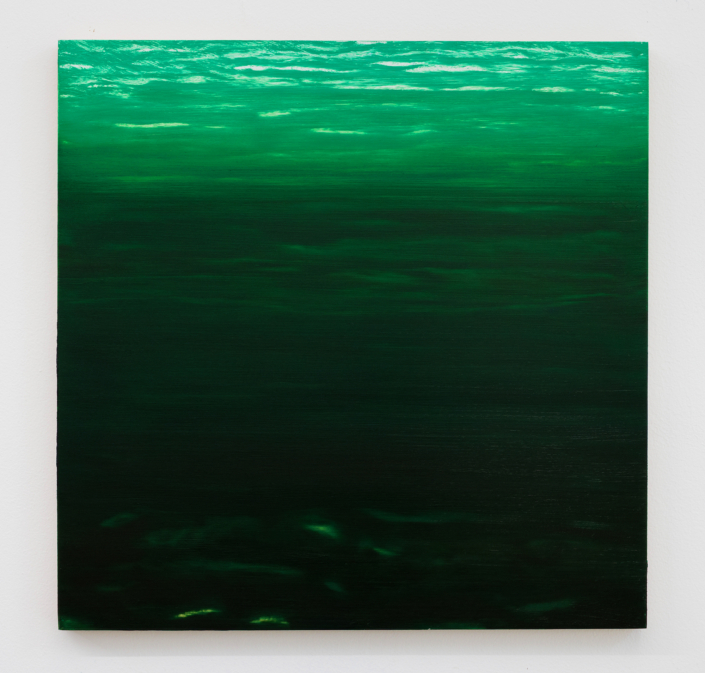
Nicole Burko draws from her personal experiences of freediving into underwater caverns on a single breath. What reads as horizon—as land meeting sky—is, in her paintings, always a view from below the surface, light pressing down from above. Her landscape is real and inverted simultaneously, extending the exhibition’s logic of green as a shifted perception.
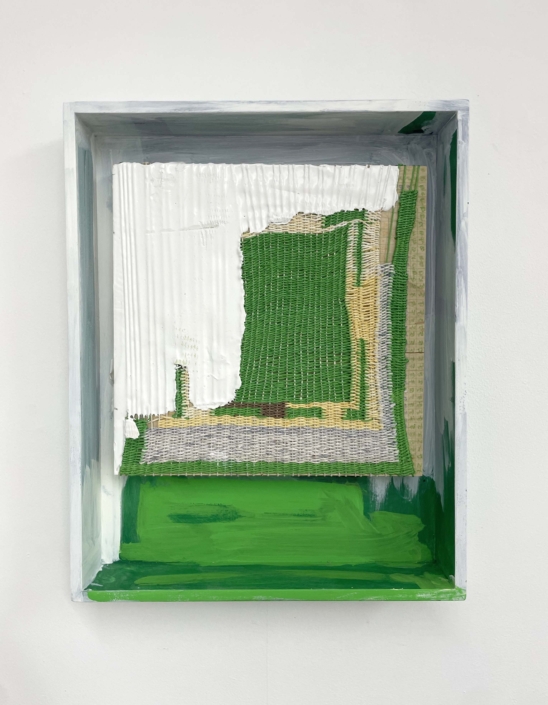
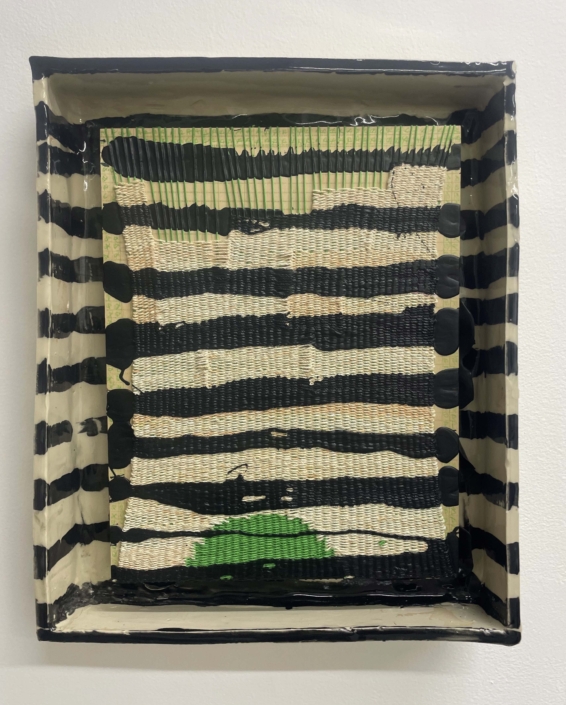
For Moira Holohan, chroma green—the green of the film industry’s green screen—has become a contemporary signifier: a portal, a marker of unstable identity, a place of transformation. In the works on view, that green migrates from the digital into the textile and the painted mark, carrying with it the instability of a space where one image ends and another begins.
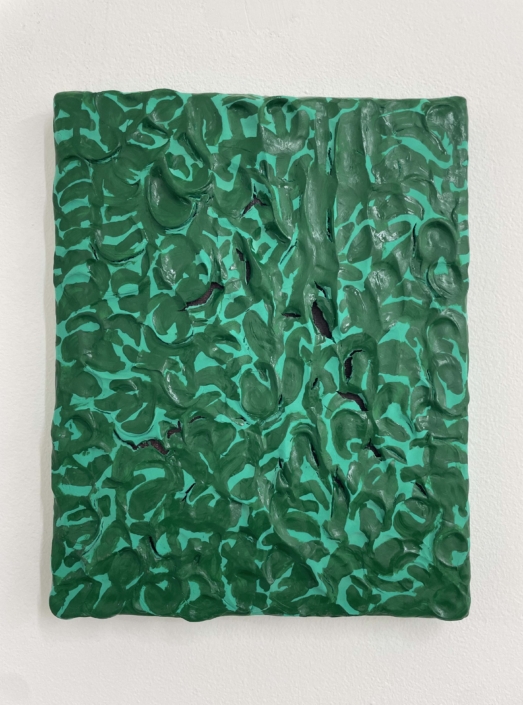
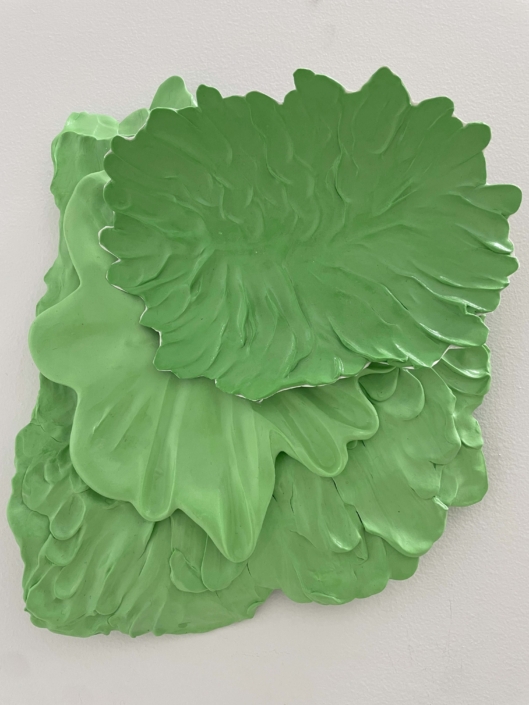
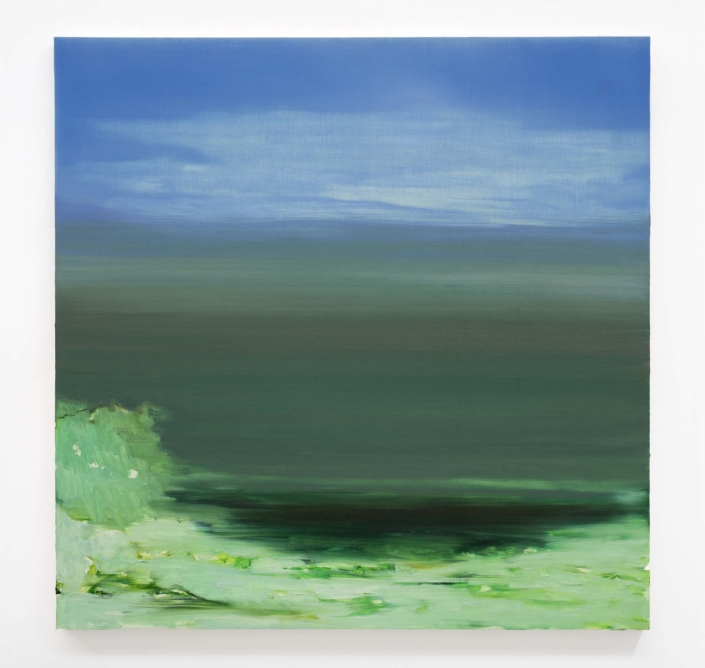
Karen Starosta-Gilinski’s recent work moves between fingers and clay on canvas—tactile, direct, and grounded in the Venezuelan landscape of her formation. Her green is terrestrial, almost remembered: grass, growth, and the irreducible fact of the natural world pressing back; it completes the exhibition’s movement from image to material ground.
Together, the three practices hold a single color across different relationships to land, surface, and image—and show that green, like verdure itself, is less a color than a condition.
Nicole Burko
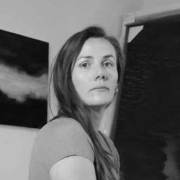
Nicole Burko (b. 1987, Toronto, Canada; lives and works in Miami, FL) earned her BFA in painting from the New World School of the Arts in 2011 and her MFA from Columbia University in 2019. Alongside her studio practice she has maintained a parallel career in teaching, working as an assistant professor at Columbia University and, currently, as a visual art instructor at Miami Arts Charter School. Burko’s oil paintings draw from her own explorations of the ocean through freediving—the act of taking a single breath and descending as far as humanly possible—to produce psychological landscapes that investigate the vastness of the natural world through an intimate lens. She is an Artist Resident at Dimensions Variable, and in 2025 she presented Sinking Feeling, her first solo exhibition with Andrew Reed Gallery, Miami. Her work has also been exhibited in museums and institutions in New York and Miami, including the Frost Art Museum. Select group exhibitions include Still, Moving, Spinello Projects (2026); Verdure, Dimensions Variable (2026); Fairyland 2: Deeper, Darker, Mindy Solomon Gallery, curated by Valerie Hegarty (2025); Untitled Art, Miami Beach, with Dimensions Variable (2025); and Painting Now Forever, Edge Zones, curated by Charo Oquet (2024).
Moira Holohan
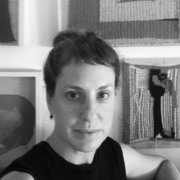
Moira Holohan (b. New York City) is a multimedia artist. Her practice begins with the body and gesture as both subject and material, shaped by growing up in New York City, the art history of the New York School, and present-day experience, all approached with a bit of humor.
Holohan holds an MFA degree from Hunter College, NY (2008) and a BA from Bard College, NY (1998).
Moira Holohan is a resident artist at Dimensions Variable, Miami. Holohan’s recent Solo exhibitions include: “Marking Time Making Fiction” at Sami Zoobi New Media Gallery, UNC Asheville, North Carolina(2026), “Dits and Dahs” at the Zillman Art Museum, University of Maine (2024), and “Ergo Argot” at Emerson Dorsch Gallery in Miami (2024). Recent residencies include Emerson Dorsch Residency (2026) and Active Archive Residency at Black Mountain College Museum + Arts Center in North Carolina (2025). Select group exhibitions: Dimensions Variable, Miami, FL(2026), Girls Club, Fort Lauderdale, FL(2026, 2025), Museum of Contemporary Art North Miami (2023, 2010), Pérez Art Museum Miami (2017, 2013, 2011), and FIU Frost Art Museum (2017). Holohan is the recipient of the Miami Individual Artists (MIA) grant (2025, 2023, and 2022), the South Florida Cultural Consortium Grant(2022), and the Artist Access Grant (2025, 2023, 2014).
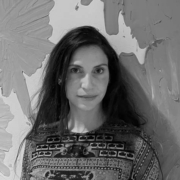
Karen Starosta-Gilinski
Karen Starosta-Gilinski (b. 1982, Minnesota, USA; lives and works in Miami, FL) was raised in Caracas, Venezuela. She studied at the Accademia del Giglio in Florence and earned her BFA, cum laude, from the Miami International University of Art & Design. Her practice gathers found objects, altered materials, and comforting things—clay on canvas, plush toys, recycled objects—into assemblages and sculptures that are humorous, tactile, and heartfelt. Solo exhibitions include the Melin and Moore Buildings in the Miami Design District, the Art and Culture Center of Hollywood (curated by Jane Hart), and the Frost Art Museum (curated by Klaudio Rodriguez), which holds a commissioned sculpture in its permanent collection. A former pioneer artist at Fountainhead Studios, she now works from a studio at Dimensions Variable in Little River, Miami. Select group exhibitions include David Castillo Gallery, the Bass Museum, the Coral Gables Museum, the Freedom Tower (curated by Sonia Becce), Bakehouse (curated by Bonnie Clearwater), and Primary, Los Angeles, with further showings in London, Venezuela, and Shanghai. Her work is held in public and private collections, including the FIU Frost Art Museum and the Bass Museum.